
In transport refrigeration systems, loss of function is often attributed to electronic control components such as the PCB or Controller. However, in systems equipped with Electronic Throttling Valves, ETV, or CSMV valves, the root cause may lie within the valve itself or its control response.
Incorrect diagnosis can lead to unnecessary replacement of high-cost electronic components, increased downtime, and inefficient troubleshooting. A structured diagnostic approach should therefore confirm valve operation before proceeding to controller replacement.

System context
The ETV / CSMV valve is a critical component within the refrigeration system, responsible for modulating refrigerant flow based on control input from the unit controller. The controller continuously adjusts valve position to maintain setpoint temperature, respond to load variations, and support system efficiency.
In simple terms, the functional relationship is:
Controller, such as SR-2, SR-3, or Controller
↓
ETV / CSMV valve
↓
Evaporator/refrigeration circuit
↓
Temperature feedback from sensors

Terminology clarification
Different OEMs may use different terminology for comparable valve functions:
-
ETV, Electronic Throttling Valve, commonly used by Thermo King®
-
CSMV, Carrier® Suction Modulation Valve, commonly used by Carrier®
While both perform similar modulation functions, differences may still exist in control strategy, signal characteristics, and mechanical design. For diagnostic purposes, the functional principles remain comparable, but OEM-specific behaviour should always be considered.
Why valve verification is critical
Before replacing control components, it is essential to confirm whether the valve is:
-
Responding to control signals
-
Opening and closing correctly
-
Mechanically functional
Failure to verify valve operation may result in misdiagnosis of PCB or Controller faults, unnecessary component replacement, and extended system downtime.
Typical valve failure modes
Understanding common failure behaviour can improve diagnostic accuracy.
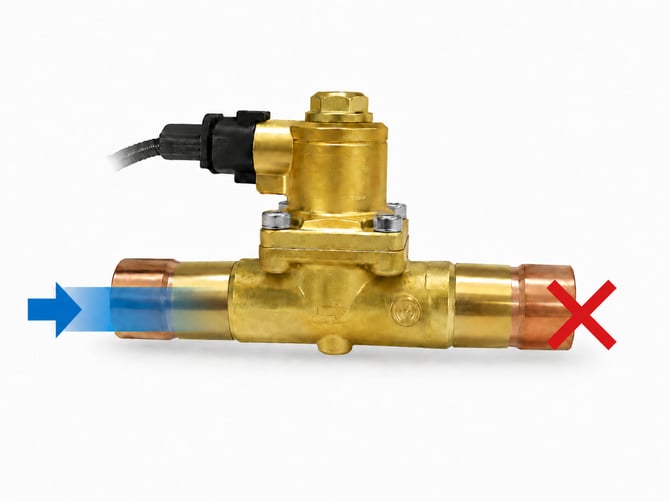 |
Valve stuck closedMay result in no cooling or insufficient cooling. |
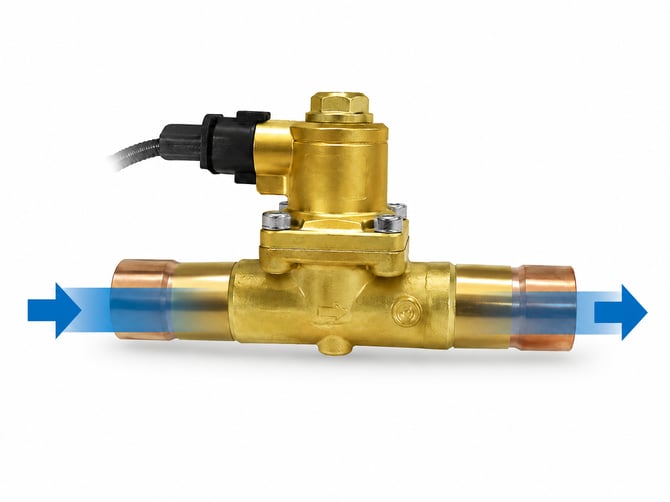 |
Valve stuck openMay cause poor temperature control or overcooling. |
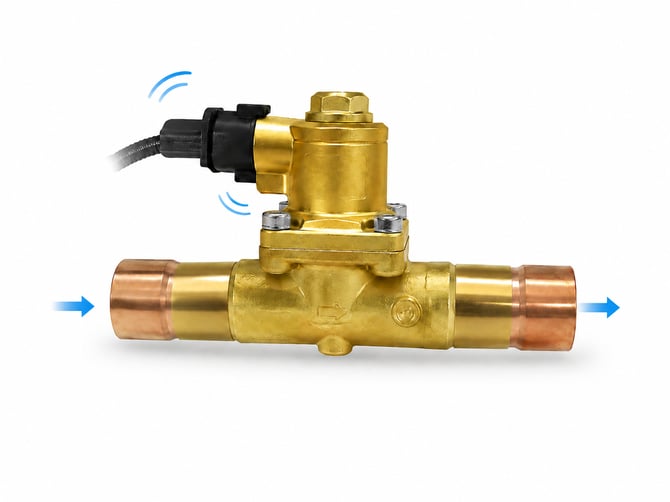 |
Intermittent responseMay lead to unstable temperatures. |
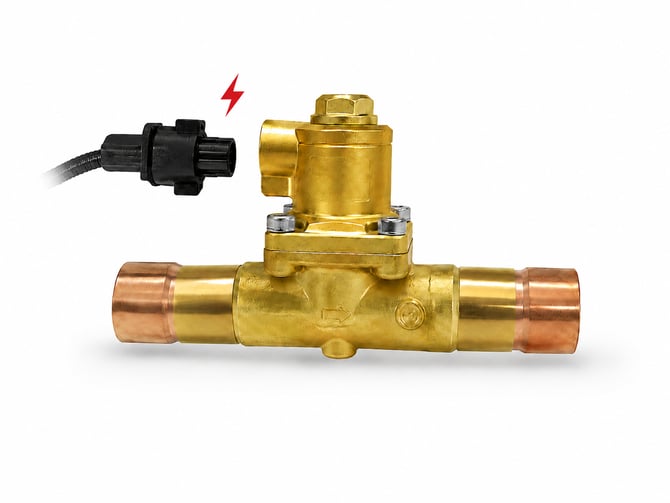 |
Electrical failureMay cause no actuation or no response. |
Slow responseMay reduce efficiency and delay pull-down. |
Recommended diagnostic workflow
Step 1, identify the system symptom
Start by confirming the actual complaint, such as:
-
Loss of cooling
-
Inability to reach setpoint
-
Unstable temperature
Step 2, confirm likely valve involvement
Determine whether the affected function is linked to refrigerant flow control. If it is, the valve should be included in the fault-finding process.
Step 3, verify valve operation before replacing the PCB
Use a dedicated valve tester tool to:
-
Check actuation response
-
Confirm opening and closing behaviour
-
Validate basic mechanical function
Step 4, interpret the result
If the valve operates correctly
Investigate the controller, wiring, or sensors.
If the valve does not respond
A valve or actuator fault is likely.
If the response is partial or inconsistent
The issue may relate to a mechanical problem or a control signal issue.
Step 5, continue with further diagnostics only after valve verification
Only after valve operation has been confirmed should PCB or Controller replacement, or more advanced electrical diagnostics, be considered.
When to use a valve tester
A valve tester is particularly useful in the following situations:
Before replacing any component
This helps confirm whether the valve is actually the root cause before changing other parts.
After replacing the controller with no resolution
If the controller has already been changed and the function is still unavailable, the valve should be checked.
Before removing the valve
This can help avoid unnecessary disassembly, labour, and downtime by checking whether the valve opens and closes before removal.
Operating considerations
Valve behaviour may vary depending on system conditions. Relevant factors can include:
-
Diesel mode vs Electric standby
-
Pull-down vs Steady-state operation
-
Single-temp vs Multi-temp systems
Technicians should ensure that the system is in a valid operating state and that control signals are present during testing.
Myriad parts supporting this application
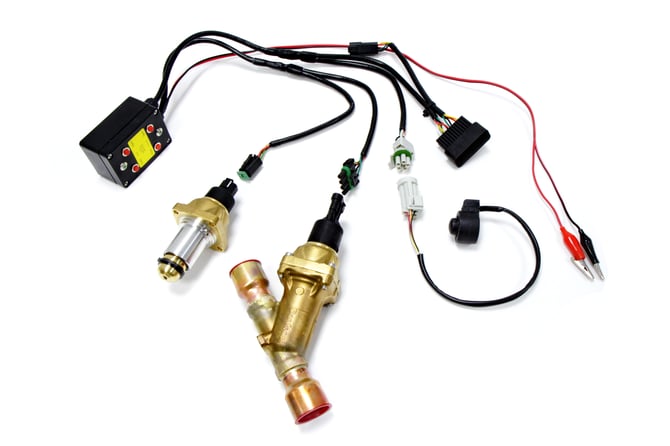
Valve testerETV / CSMV Tester Tool OEM reference: MRD-07-00375-00 |
 |
Related valve components
Depending on the application and fault diagnosis, Myriad supports these systems with related valve parts, including:
- Valve repair kits
- Valve piston, MPN2659
- Complete valves
- Valve heads, square
- Valve head round, MPN3482
- Complete ETV valve assembly, MPN3484
Summary
A structured diagnostic approach improves accuracy, reduces unnecessary replacement, and helps control repair costs.
The ETV / CSMV valve is a core control component, not just a mechanical part. Faults should not be attributed to the PCB or Controller without prior validation of valve operation. Using a valve tester enables faster, more reliable fault isolation.
Key principle:
Always confirm valve operation before replacing high-cost control components.
Need support?
If assistance is required with identifying the correct part, diagnosing a valve-related issue, or selecting an appropriate repair solution, the Myriad technical team can support with application-specific guidance.
Myriad parts relevant to this topic
Myriad offers a range of parts related to CSMV / ETV valve applications, including the tester tool and associated valves or repair items.
Tester tool
MPN5500
ETV CSMV TK and CT Tester Tool
OEM reference: MRD-07-00375-00
CSMV valve and repair products
MPN2479
Valve Repair Kit CSMV
OEM reference: MRD-14-00441-01
MPN2481
Valve Repair Kit CSMV
OEM reference: MRD-14-00410-53
MPN2659
Valve Piston CSMV
OEM reference: MRD-14-00263-20
MPN2478
Valve CSMV Vector®
OEM reference: MRD-14-00441-00
MPN2480
Valve CSMV HE 19®
OEM reference: MRD-14-00410-28
MPN2482
CSMV Valve Vector® 1350
OEM references: MRD-14-00410-22, MRD-14-00410-27
ETV products
MPN3489
ETV Throttling Valve Head Square T-XX SLXe SLXi
OEM reference: MRD-40-1472
MPN3482
ETV Throttling Valve Head Round SLX SLXe SLXi
OEM reference: MRD-40-1571, MRD-40-0947
MPN3484
ETV Throttling Valve Complete Square SLX SLXe SLXi
OEM reference: MRD-61-9506